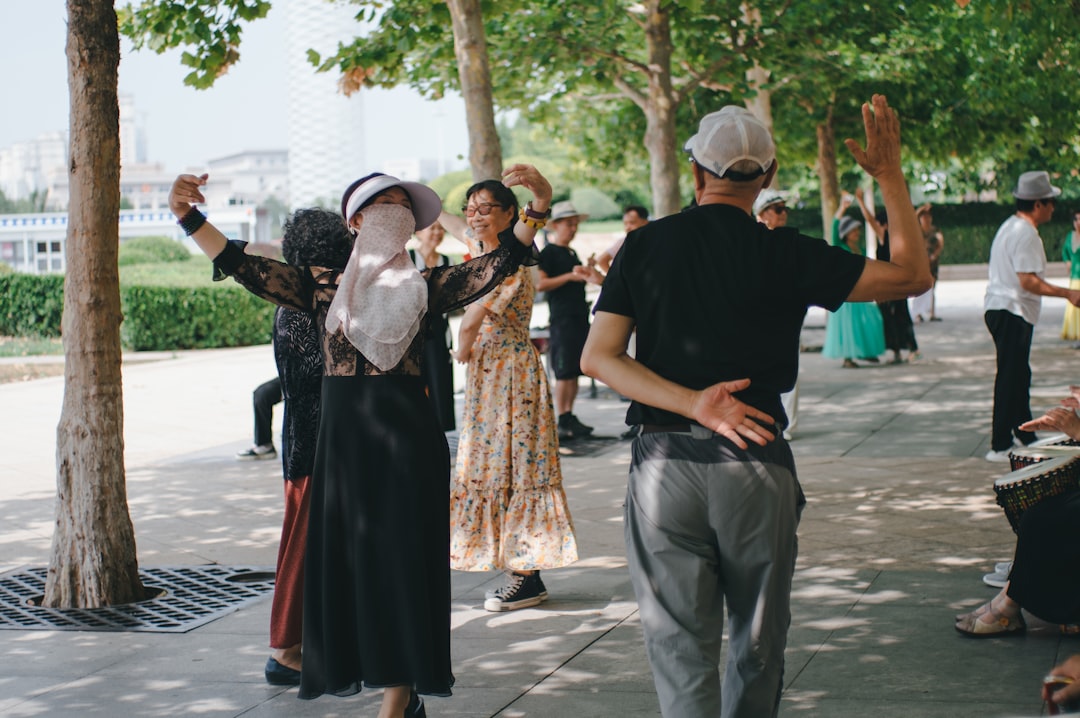

In July 1518, in the city of Strasbourg (then part of the Holy Roman Empire, now in France), one of history's most bizarre and mysterious events began to unfold. A woman named Frau Troffea stepped into the street and began to dance. There was no music, no apparent reason for her actions—just a solitary figure dancing with increasing fervor in the summer heat. This unusual spectacle might have been dismissed as a momentary eccentricity, except for what happened next.
From One Dancer to Hundreds
Frau Troffea continued dancing for days without rest. Within a week, more than 30 people had joined her inexplicable dance. By the end of the month, according to contemporary accounts, the dancing plague had claimed roughly 400 victims. Men, women, and children danced day and night until they collapsed from exhaustion, some even dancing themselves to death.
Chronicle accounts describe people dancing until their feet were bloody, dancing through pain and exhaustion, seemingly unable to stop themselves. The affected individuals didn't appear joyful; rather, they seemed to be in a trance-like state, expressions of pain and fear on their faces as they continued their involuntary movements.
"It was a horrifying sight, the dancers were covered in sweat, their faces expressed only pain, their limbs trembled with exhaustion, but they were unable to stop their fearsome movements."
— From a chronicle account of the Dancing Plague
The Official Response
The authorities of Strasbourg were baffled by the phenomenon. Initially, they believed it might be a case of "hot blood"—a condition which, according to medical understanding of the time, could be cured through physical exertion. Following this logic, they actually encouraged the dancing, going so far as to construct a wooden stage in the city's grain market and hiring musicians to accompany the afflicted.
This approach quickly proved disastrous. Rather than exhausting the dancers and bringing an end to the bizarre behavior, it seemed to encourage more people to join, and the existing dancers became increasingly frenzied.
As the deaths mounted, city officials changed their strategy dramatically. They banned public music and dancing, and took the afflicted to a shrine dedicated to St. Vitus, a Christian martyr who, since the late Middle Ages, had been associated with dancing manias. According to records, many dancers recovered after visiting the shrine and praying for deliverance.

Theories and Explanations
The Dancing Plague of 1518 remains one of history's most puzzling events. Over the centuries, numerous theories have been proposed to explain this strange phenomenon:
1. Ergot Poisoning
One of the most frequently cited theories is ergot poisoning. Ergot is a fungus that can grow on rye and other grains, especially in damp, rainy conditions. It produces ergotamine, a chemical structurally similar to LSD that can cause hallucinations, spasms, and psychotic delusions.
Strasbourg and the surrounding region heavily depended on rye for their bread, and the weather conditions in 1518 would have been favorable for ergot growth. However, ergot poisoning typically causes muscle contractions and seizures rather than coordinated dancing movements, making this explanation problematic.
2. Mass Psychogenic Illness
Many modern historians and medical researchers favor the theory that the Dancing Plague was a case of mass psychogenic illness (MPI), formerly known as "mass hysteria." MPI is a phenomenon where physical symptoms with no organic cause spread rapidly through a group of people, often triggered by stress or anxiety.
The early 16th century was a period of extreme hardship in Strasbourg. The region had suffered from widespread famine, disease outbreaks, and unusually high temperatures. These stressors, combined with the superstitious beliefs of the time, created fertile ground for a mass psychological response.
3. Religious Fervor and Cultural Context
Religious and cultural factors likely played a significant role. St. Vitus' Dance, a term later used to describe Sydenham's chorea (a disorder characterized by rapid, uncoordinated movements), was already part of the cultural lexicon. People believed that St. Vitus could both curse victims with dancing mania and cure them.
Some historians suggest that at least some of the dancers may have been members of fringe religious sects who used dance as a form of ecstatic worship, with others joining due to social contagion.
4. Tarantism
Another theory links the dancing plague to tarantism, a phenomenon observed in southern Italy where people believed that they had been bitten by a tarantula spider and could only be cured through frenzied dancing that would work the venom out of their systems. While Strasbourg is far from Italy, cultural ideas did travel, and the concept of "dancing out" a toxin or curse may have been familiar.
Historical Context and Similar Events
The Dancing Plague of 1518 was not an isolated event. Between the 14th and 17th centuries, Europe experienced multiple episodes of what contemporary chroniclers called "dancing mania." Major outbreaks occurred in Aachen in 1374, in Cologne and Metz in the 1370s, and in several other German towns throughout the 15th century.
These events typically occurred during or shortly after periods of extreme societal stress—in the wake of the Black Death, during famines, or times of political upheaval. This pattern supports the psychological explanation, as mass psychogenic illnesses are more likely to occur during periods of extreme collective anxiety.
Modern Scientific Understanding
From a modern medical perspective, several conditions might explain some aspects of the dancing plague:
- Chorea: A neurological disorder causing involuntary, dance-like movements
- Sydenham's chorea: A specific form of chorea that can occur after infection with streptococcal bacteria
- Mass sociogenic illness: A condition where a group of people experience similar physical symptoms with no identifiable physical cause, spread through social suggestion
- Enclosed social networks: Research shows that tight-knit communities with shared beliefs are particularly susceptible to behavioral contagion
However, no single modern diagnosis fully explains all aspects of the event as it was described in historical accounts.
Legacy and Cultural Impact
The Dancing Plague of 1518 has left a lasting impression on our cultural imagination. It has inspired artwork, literature, music, and continues to fascinate because it represents an extreme example of how human behavior can be influenced by social and psychological factors.
The event also offers a window into how pre-modern societies understood and responded to puzzling medical phenomena. Rather than seeking purely physical explanations, they often blended medical, religious, and supernatural interpretations.
Today, the Dancing Plague serves as a compelling case study for psychologists, historians, and medical researchers interested in the complex interactions between culture, belief, stress, and human behavior. It reminds us that the human mind and its influence over the body contain mysteries that we are still working to understand fully.
Whether caused by toxins, psychological factors, cultural beliefs, or some combination of these, the Dancing Plague of 1518 stands as one of history's most fascinating and perplexing events—a reminder that truth can indeed be stranger than fiction.